


|
|
|---|


Showing posts with label Toyota. Show all posts
Showing posts with label Toyota. Show all posts
Saturday, July 16, 2011

When it debuted 10 years ago, the Toyota Highlander blazed the trail for midsize crossover SUVs. At the time, we wondered whether people would like this "Camry wagon" (the Highlander typically has had a lot of Camry in its DNA) or continue to stick with truck-based SUVs. Well, the last decade has pretty much proven that refined carlike crossovers have prevailed.
Thanks to a quiet, fairly roomy cabin, a V6 engine that is both smooth and comfortable and a reputation for reliability, the Highlander has remained one of the most popular midsize crossovers. A refresh for the 2011 Highlander brings updated styling and additional standard features. A new third-row seat has a 50/50-split folding design that makes it easier to configure the vehicle for passenger use or cargo hauling.
Otherwise, the 2011 Toyota Highlander stays the course. This means a smooth, quiet ride and comfortable seating for up to seven passengers (though the third row is a bit tight compared with some of the Highlander's competition). The Highlander also boasts a 40/20/40-split second-row seat with a removable center seat that allows walk-through access to the third row, not to mention the comfort of captain's chairs with fold-down armrests in the second row.
While the midsize 2011 Toyota Highlander has a lot going for it, this crossover faces some stiff competition. The larger crossovers from General Motors -- the Buick Enclave, Chevrolet Traverse and GMC Acadia -- offer more cavernous interiors with seating for up to eight passengers. The Ford Flex and Mazda CX-9 also have their own distinct advantages, as do the totally redesigned Dodge Durango and Ford Explorer. We suggest checking out these models, but in general we still believe the Highlander hits the sweet spot between passenger-car comfort and SUV-style utility.

Interior style is well refined and smart, granting a comfortable cabin with many convenient features. Interior materials, as before, remain high quality.
The big news inside is third row seating is now standard and, thankfully, the previous seat has been discarded. Instead of a one-piece design, the new third row seat is split 50/50, allowing four passengers in the vehicle when one half of the second and third seats are folded to accommodate long objects. Access to the third-row is made easy with the walk-in lever placed at an easy to reach position at the bottom of the passenger-side second-row seat.
The Highlander Hybrid offers a wonderful 40/20/40-split second-row bench seat. It reclines, slides fore and aft and the center section can be removed and stowed away, leaving an open center aisle. This configuration results in a pair of second row captain’s chairs with fold-down armrests, much like those found in many minivans.
In terms of cargo, this SUV provides 10.3 cubic feet of space when the third row is in use, just over 42 cubic feet of space behind the second row when the third row is folded. With all rear seats stowed away, the Highlander Hybrid allows for a voluminous 94 cubic feet of storage area.
What’s the driving experience in this new hybrid? In one of the first reviews of the vehicle, Edmunds.com says, “With the same tires and suspension underneath, the 2011 Highlander Hybrid drives about the same as before. We observed the same impeccably smooth and quiet ride, reasonable coordination and modest limits as before.”
The Highlander Hybrid is available in both base and Limited trim levels. Base models come well equipped with seven-passenger seating, air-conditioning with rear climate control, a tilt/telescoping steering wheel and eight-way power driver’s seat. The standard CD audio system includes XM Radio, MP3/WMA capabilities along with Ipod connectivity and Bluetooth wireless technology. There’s also a center screen in the dash to display various bits of vehicle information as well as to provide the image captured by the car’s back-up camera. A navigation system is optional for the first time on the base model.
The Limited model adds leather interior with a 10-way power driver’s seat and four-way power front passenger seat that are both heated, power moonroof and three-zone climate control. DVD entertainment and navigation systems are optional.
There is a gaggle of electronic active safety features: electronic stability control, traction control, and four-wheel anti-lock disk brakes with brake force distribution and brake assist. Occupant safety is delivered by seven airbags including dual-front, front side, side curtain, and one at the driver's knee. The National Highway Traffic Safety Administration has not tested the 2011 Highlander.

In terms of design and style, the 2011 Highlander’s updates include an all-new hood, fenders and front fascia. The hybrid model is differentiated from the gasoline model by its own unique grille and bumper design. It shares the new fenders and hood with the gas Highlander but features color-keyed rocker panels with chrome accents, plus vertically stacked fog lamps. The projector beam headlights and redesigned taillights feature blue lens covers.
The hybrid model has about one inch less ground clearance than the standard all-wheel drive Highlander SUV, making entry and exit more like a minivan. Base models are equipped with 17-inch alloy wheels, while the Limited trim brings 19-inch alloy wheels and a power rear liftgate.
Even with the styling changes, the Highlander won't turn many heads, but then again, it's not supposed to. But the looks continue to boast a wide appeal that is popular with families, weekend roadtrippers, and diehard urbanites.

The Hybrid Synergy Drive powertrain is shared with the much fancier Lexus RX 450h. It’s made up of a 3.5-liter V-6 engine mated to Toyota’s electronic continuously variable transmission, which contains two electric motor-generators. They both recharge the nickel-metal-hydride battery pack and supplement engine torque in powering the front wheels.
Combined output of the engine and motors is a substantial 280 horsepower. The standard all-wheel-drive is provided by a third electric motor driving the rear wheels, though it’s for light-duty use only (unlike the fully mechanical all-wheel-drive in the 2011 Ford Escape Hybrid).
The 2011 Toyota Highlander Hybrid is EPA-rated at 28 mpg city, 28 mpg highway, for a combined overall rating of 28 mpg. That’s good gas mileage for a large crossover like this one, and upwards of 25 percent more fuel-efficient than the 22-mpg combined rating for the four-cylinder, front-wheel-drive gasoline Highlander. And if's a huge improvement on the dismal 19 mpg of the comparable V-6 version with all-wheel-drive.
The improvement from fitting the hybrid system, however, doesn’t seem as great as in smaller Toyota products, because the overall miles per gallon are lower. That simply reflects the fact that it takes more energy to push this large, heavy vehicle through the air.
Other advantages to the Highlander Hybrid include stellar safety ratings and equipment, including a “Top Safety Pick” from the Insurance Institute for Highway Safety (IIHS). There’s also a substantial list of standard equipment even before you start ticking boxes on the options list. Two trim levels—base and the top-of-the-line Limited—are offered on the Highander Hybrid, plus an options list including various sound systems, a power moonroof, a navigation system, a power tailgate, and various other luxury and convenience items.

The Highlander comes with a long list of standard safety features including antilock disc brakes, stability control and hill-start assist. All-wheel-drive models also come with hill-descent control, which electronically intervenes with the antilock brakes to control speed on steep, slick surfaces like snow-covered driveways.
The Highlander's cabin is fitted with a total of seven airbags, including side-impact airbags for front seat passengers, side curtain airbags that cover all three rows of seats and a driver-side knee airbag. Whiplash-reducing active front head restraints are also standard.
In government crash tests, the Highlander earned five stars (the highest possible) for the driver and four stars for the front passenger in frontal impacts, and five stars for side impacts. In tests conducted by the Insurance Institute for Highway Safety, the Highlander received "Good" ratings (the highest possible) in both frontal-offset and side impact tests.
reference:www.greencarreports.com,www.hybridcars.com,www.edmunds.com

Tuesday, July 12, 2011

No doubt influenced by its forebears, the 2011 Toyota FJ Cruiser nods to the old school, with its boxy shape and narrow-set headlights inspired by the design cues of the original, iconic FJ40 that came to America in the 1960s. And just like the old FJ, it is as tough and agile as a mountain goat thanks to a robust engine, a rugged chassis and a nimble off-road nature.
The FJ Cruiser hasn't changed much since its introduction four years ago. Of course, this means that its strengths and weaknesses haven't changed, either. While it offers reasonable maneuverability and comfort on either blacktop or dirt, the FJ's thick roof pillars and high hood line compromise visibility. Rear-seat ingress and egress is also awkward. Despite the increased folding angle for the front passenger seat in this year's model, climbing (key word) into the back is still hampered by small rear-access doors and a high step-in height. Well, this is a vehicle for sport, not limousine duty.
As midsize SUVs go, the 2011 FJ Cruiser has formidable competition. The Nissan Xterra has four conventional doors, so it's a better choice for those who want a capable off-roader with maximum daily versatility. And there's always the venerable Jeep Wrangler. Although not as refined or powerful as the FJ, it has four real doors (in the Unlimited model) and about the best off-road ability of anything with four wheels. That said, the 2011 Toyota FJ Cruiser is still a serious piece of off-road kit and should satisfy anyone who wants a rugged rig with the boulder-crawling spirit.

Like the exterior, the interior of the Toyota FJ Cruiser reflects the character of the early FJ 40s, especially when equipped with the optional body-colored door panel inserts. The standard dashboard looks like an extruded aluminum beam, with audio and climate controls set into a body-colored panel in the center.
If you want leather seats, you don't want an FJ Cruiser, which comes only with water-resistant cloth upholstery and rubberized floor and cargo mats. The expectation is that people who drive FJ Cruisers will get them dirty, and want the easy cleanup provided by such materials.
The seats have active headrests. In certain rear collisions, a cable-actuated mechanism in the headrest moves it upward and forward to help limit the movement of the occupant's head, potentially reducing whiplash injuries.
Switches for various mechanical systems are set in a panel just ahead of the shift lever. Not only are they conveniently placed, but there are dummy switches to ease installation of aftermarket equipment such as auxiliary lighting or locking axles for extreme off-road use.
The driver faces white-faced gauges (speedometer, tachometer, engine temperature, voltage and fuel level) that are easy to read. In addition to the regular glove box ahead of the front passenger seat, there's a smaller covered storage box on top of the instrument panel in front of the driver. This area can be fitted with an accessory Garmin Quest 2 navigation unit that can be removed from the vehicle for hiking or other activities.
Both Upgrade Packages and the All-Terrain Package add a trio of gauges (outside thermometer, compass and inclinometer) that sit on top of the center of the dash.
Cup holders are provided in the center console and all four doors. A 12-volt outlet is mounted on the switch panel ahead of the shifter; and a three-prong, grounded 115-volt power outlet in the cargo area with a switch for either 100 or 400 watts of output (the higher figure available when the vehicle is at idle).
The rear seatback splits 60/40 to optimize cargo carrying options. The rear-seat cushion tips forward and can be removed to provide a few more inches of cargo area behind the front seats.
The standard audio system includes a CD player and iPod and MP3 capability as well as two ceiling-mounted speakers designed to enhance the sound experience within the FJ Cruiser. The Upgrade Packages include an FJammer audio system with pair of 2.6-inch speakers mounted on the rear pillars; Upgrade Two adds a subwoofer as well.
Because the FJ Cruiser has wide C-pillars that may interfere with the driver's rearward vision, a rear sonar system and a rearview camera are included in the Convenience Package, to warn the driver of the proximity of objects when the transmission is in Reverse. We had no trouble parking the FJ in urban settings on our test drive, nor did we have to move into strange positions to see stoplights through the upright windshield.

The Toyota FJ Cruiser is the rebirth of the original Toyota FJ 40, known in North America as the original Land Cruiser. It was a rugged, go-anywhere vehicle, a sport utility vehicle decades before the genre had a name.
The FJ Cruiser was designed in Southern California. The design evokes the heritage of the FJ40 and other early Land Cruisers without being retro. This is no simple cloning of a nearly half-century old design. Instead, what Toyota wanted to do was to project how the original Jeep-like FJ would have evolved had it remained in production all these years. The engineering and manufacturing of the Toyota FJ Cruiser are done in Japan.
Early FJs and Land Cruisers were patterned on the World War II Jeep. Rugged and reliable, Toyota FJs and Land Cruisers became the vehicle of choice for explorers, ranchers, missionaries, United Nations peacekeepers, merchants or anyone else who needed to drive through places such as Australia's Outback, Africa's plains, across Asian steppes, through South American jungles or anywhere else where roads were virtually nonexistent, with trails as harsh and challenging as the natural environment.
Exterior styling cues from the original FJ brought forward on the FJ Cruiser include a narrow slot of a second grille built into the front lip of the hood, the trio of windshield wipers at the base of an upright windshield, the round headlights and the metallic-colored enclosure that frames them and the main grille (with Toyota in simple gothic letters, instead of the interlocking oval emblem that adorns the face of other modern Toyotas), the white roof, the wraparound rear windows and the spare tire mounted on the back of the vehicle.
The FJ Cruiser shares much of its under structure with the Toyota 4Runner four-door SUV and Tacoma pickup truck, but you'd never guess that to look at the FJ with its wide, turtle-shell body design.
Short front and rear overhangs allow serious off-road maneuvering. The 4x4 versions offer 9.6 inches of ground clearance, with optional underbody armor to provide extra protection against rocks and other obstacles met on unpaved trails.
Viewed in profile, the most noticeable aspects of the FJ Cruiser are its upright windshield, tall and protective body sides, short windows and very wide C-pillar on either side of the cargo area.
Though it may look like a two-door, the FJ Cruiser actually has four doors, with the rear side doors opening rearward to create a good-sized opening for access to the back seat and cargo area. The rear door also opens wide, and features a backlight glass that can be flipped up when the door itself is closed.
The FJ Cruiser features an interesting color palate, including Army Green, a bright yellow (Sun Fusion), a silver (Titanium Metallic), the difficult-to-describe Black Diamond, the very literal Brick, plain Black, Silver Fresco Metallic, and Iceberg White. The paint color covers only the hood, fenders, body sides, C-pillars and rear door. In homage to the old FJ40s, all FJ Cruisers have white roofs.

ENGINE
FJ Cruisers are available in rear- and four-wheel-drive configurations. They all use the same 4.0-liter V-6 engine. Mechanical features include:
260-hp V-6 with 271pounds-feet of torque
Two-wheel-drive FJ Cruiser gets five-speed automatic transmission
Four-wheel-drive models get either the automatic or a six-speed manual
4WD includes a two-speed transfer case with a 2.57:1 low-range ratio
Skid plates, mud guards and tow hooks
Standard locking rear differential
Off-road package adds Bilstein shock absorbers and a special locking rear differential that communicates and cooperates with the brake-based traction control
5,000-pound towing capacity

Standard safety features include stability control, traction control, antilock disc brakes, front-seat side airbags and rollover-sensing side curtain airbags. In Edmunds testing, the Toyota FJ Cruiser came to a stop from 60 mph in 123 feet -- very good performance for an off-road SUV.
The Toyota FJ Cruiser has not been rated using the government's new, more strenuous 2011 crash-testing procedures. Its 2010 ratings, however, (which aren't comparable to the new methodology) were a top five-star rating for driver safety in head-on collisions, while front passenger protection rated four stars. In side-impact testing, front and rear passenger protection received five stars.
The Insurance Institute for Highway Safety gave the FJ its top score of "Good" for the vehicle's protection of occupants in frontal-offset and side-impact collisions. The roof strength test resulted in a second-best score of "Average."
reference:www.cars.com,autos.aol.com,www.edmunds.com

Monday, July 11, 2011

The Toyota Corolla is the world's best-selling car of all time. More than 33 million have been sold in the last 35 years, which makes it mathematically assured that you know someone who either owns one or used to own one. This car owes much of its success to Toyota's reputation of dependability and it's hard to argue with such a buying rationale.
Yet once you look beyond that single attribute, you'll discover that the 2011 Toyota Corolla is no longer the class leader it once was. The Corolla's fuel economy used to be a benchmark, but now it gets thumped by the new Hyundai Elantra's EPA-rated 40 mpg highway and 33 mpg combined. Interior quality is another area in which the Corolla finds itself outclassed. And while the Corolla has never been described as being fun to drive, the current car feels so disconnected from the road that you may find yourself thinking you're playing a very dull video game.
The sport-tuned XRS trim, with its more powerful four-cylinder engine, used to be the model of choice for Corolla buyers seeking extra responsiveness, but Toyota has killed it for 2011. Also removed from the Corolla menu this year is the XLE, which was the most luxury-focused trim in the lineup. On the plus side, the Corolla gains revised styling for 2011, particularly with the sport-look S trim, which also gets the thick, flat-bottomed steering wheel found in the new Scion tC.
If you think we believe that you can do better than the 2011 Toyota Corolla, you're right. It's not just us, either. Two years ago we invited six regular Americans to drive the Corolla alongside the Honda Civic and previous-generation Mazda 3. None of our testers put the Corolla in 1st place and all but the most senior members of the bunch placed it dead last. They echoed our opinion that the Corolla feels disconnected to drive and expressed disappointment with the look and feel of its cabin.
Today the Corolla faces even stiffer competition. Of course, the Corolla is still known for its reliability, but then so is the Honda Civic, and Hyundai has improved dramatically in this regard. As such, we highly recommend shopping around before taking a 2011 Toyota Corolla home.

The driver's seat includes a height adjustment, but I never found an ideal driving position because the steering wheel didn't tilt low enough for me. Plus, the resting place for your left foot is incredibly small — my foot was constantly sliding off it — and uncomfortable. One of our editors thought the driver's seat didn't move back far enough, either.
A snug backseat is pretty typical for the compact segment, and the Corolla is no exception. My knees were pressed into the driver's seat, which thankfully didn't have any plastic backing. The backseat doesn't offer much thigh support, either. I'm 6-foot-1, which is a tough test for a compact, but the Corolla's rear seat seems tighter than most.
Compared with the 2011 Elantra or 2012 Focus, the Corolla's conservatively styled interior looks bland. Still, all the critical controls are thoughtfully arranged and within easy reach when driving. That said, the cabin has quite a few quality shortcomings — and only a few exceptional characteristics.
Perhaps the biggest offender is the air-conditioning controls, which consist primarily of three large dials that rotate with a sloppiness not typically seen in a modern car. Every time you adjust the temperature, fan speed or airflow direction, you'll be reminded how crude these controls are.
The cabin also has quite a bit of hard plastic on the upper door trim and armrests, so no matter where you rest your left arm, it probably won't find a cushioned surface. There are also rough finishes on the minimally padded center armrest that further diminish the sense of quality, and the urethane steering wheel on our top-level S trim felt out of place on a $20,000-plus car.
On the flip side, the optional stereo in our test car showed lots of song information on its screen, it had nicely damped buttons and it included a Bluetooth streaming audio function.

The Corolla is immediately recognizable as a Toyota, although at first you might confuse it with a Camry because size is the main distinguishing feature between the two. The Corolla is slightly longer than the Honda Civic, while the Nissan Sentra is noticeably taller and bigger. With its solid roofline, four doors, and short overhangs, it looks like a bigger car.
The 2011 Corolla gets a restyled nose, and it's a clean design. Three bars in the grille, but only the center one is defined because they are body colored. Iconic Toyota emblem in the middle of the grille. Smooth front fascia that surrounds optional foglights, and a tidy functional air intake with black mesh under the bumper. It all sweeps nicely back and upward.
The bumper underlines odd headlamps, with a sweeping outline but they're bulbous, and stick out at the corners. They're bulbous in a three-dimensional sense, but sleek in their shape.
The rear end is not so clean, starting with a thick piece of chrome that stretches between the taillamps. The wing is low and thick, with winglets at its edges; it definitely adds a sporty touch and it's not overkill. The taillamps are simple horizontal slats that wrap around from the trunk to the sides of the car, and poof out from the body like the headlamps. With less chrome, less wing, less white in the taillamps, the tail would look as clean as the nose.
Exterior fit and finish are at a high level for such an inexpensive car. Body-colored door handles and mirrors, as well as the spoiler and side sills on the S, add a touch of class. The wheels look ordinary, though, even the 16-inch alloys on the Corolla S.

Every 2011 Toyota Corolla is powered by a 1.8-liter inline-4 that produces 132 horsepower and 128 pound-feet of torque. A five-speed manual is standard and a four-speed automatic is optional.
In Edmunds performance testing, an automatic-equipped Corolla went from zero to 60 mph in 10.1 seconds -- a slower time for this class. EPA-estimated fuel economy stands at 26 mpg city/34 mpg highway and 29 mpg combined with the automatic and 28/35/31 with the manual. These numbers used to be quite impressive but pale in comparison to the new Hyundai Elantra's promise of 40 mpg highway.

The 2011 Corolla is an Insurance Institute for Highway Safety Top Safety Pick. It received the top overall score — Good — in the IIHS' front, side, rear and roof-strength tests, and it has a standard electronic stability system. However, in the National Highway Traffic Safety Administration's side-impact crash test, the Corolla received just two out of five stars.
Additional standard safety features include antilock brakes, side-impact airbags for the front seats, side curtain airbags, front active head restraints, and a brake override system.
Check out the Standard Equipment & Specs page for a full list of safety features, and visit MotherProof.com's Car Seat Check to see how child-safety seats fit in the car.
reference:www.cars.com,www.edmunds.com,autos.aol.com


The full-size sedan used to be the exclusive domain of American carmakers. Popular with families, they provided plenty of space and comfort for passengers and had trunks the size of a New York apartment. Current full-sizers may not be as massive as they were, but they're much more space-efficient so they offer nearly as much room for people and things. A good example of this is the 2011 Toyota Avalon.
The latest Avalon is known for its spacious interior, abundant luxury features and refined ride. Although this year's model brings a refresh with some new styling (front/rear ends and instrument panel), more standard features and a reduction in trim levels from three to two, the 2011 Avalon is otherwise similar to the one that debuted six years ago. That's fine with us, as there is so much to recommend the Avalon. Though its exterior looks smaller than most of its rivals, the Avalon manages to offer more space within the cabin. Meanwhile, the backseat is among the most accommodating anywhere, with standard reclining seatbacks, abundant headroom and an available power rear sunshade.
And then there is the car's remarkable combination of performance and fuel efficiency. The standard 268-horsepower V6 engine accelerates the Avalon more rapidly than similarly powered competitors while still returning impressive fuel mileage estimates of 20 mpg city and 29 mpg highway.
Unlike in years past, however, the Avalon now faces more competent rivals like the Buick LaCrosse and Ford Taurus. And even with this year's styling tweaks, the Avalon may look a bit too bland for some buyers. A past gripe involving the Avalon's pricing has been partially addressed this year as the base model comes more generously equipped but with no increase in price. Still, some budget-minded buyers may wish there was a more basic, lower-priced model. While the 2011 Toyota Avalon remains at the top of its game and is easy to recommend, it does have some worthy competition that's worth consideration.

The outgoing Avalon's dashboard — which had hinged doors over the navigation system, stereo and climate controls — is gone, replaced by a more conventional design that leaves them out in the open. The navigation system has improved graphics that fall in line with the systems in other Toyotas; the 2010 Avalon offered a dated, older navigation display. The gauges are also new.
The base Avalon grade is fairly well equipped, with standard leather upholstery, power front seats, reclining rear seats, a moonroof, dual-zone automatic climate control and a CD stereo with USB/iPod compatibility. Limited models add heated, ventilated seats, a keyless access system with push-button start, an upgraded JBL stereo and a power rear sunshade. Many of those features are optional on the base Avalon. The navigation system, which includes a backup camera, is optional.

The Toyota Avalon's calling card certainly isn't flashy looks. On the other hand, its styling is appropriately staid and elegant, and anything but offensive. The shape comes across as exactly what it is: a wrapping for the exceptionally comfortable, spacious cabin inside. In that sense, it recalls some stately European sedans of the 1950s and '60s.
Toyota has re-styled the full-size Avalon for 2011, though the changes are hardly dramatic. It requires fairly thorough inspection to realize that the Avalon has changed at all. The differences lie in details. Avalon's proportions and profile haven't changed a bit.
Nor have any of its dimensions, by more than a fraction of inch. Overall, the Avalon is eight inches longer than Toyota's top-selling Camry sedan. By most exterior dimensions, it's roughly the same size as the Ford Taurus, Chevrolet Impala, and Chrysler 300. Compared to European luxury sedans, it's larger than the mid-size Mercedes E-Class, but smaller than the full-size S-Class sedan.
The revised look for 2011 starts with a slightly wider grille connecting the headlight clusters with bolder, heavier chrome slats and trim. The lights apply the so-called light-pipe design, which creates the impression of illuminated tubes at night. The fog lights are now surrounded by a chrome garnish and more closely integrated in the air intake below the bumper.
Compared its predecessor, the 2011 Avalon has thicker, more obvious chrome strips around its side windows, and slightly smaller, more sculpted side mirrors. There's a thick strip of chrome at the bottom of the doors, above more prominently contoured side sills.
The taillights have been reshaped for 2011 to reduce turbulence at the rear. Indeed, many of the styling details are optimized to limit wind noise inside the car, including the shape of the windshield pillars and the placement of wipers under the hood line.
Subtle details distinguish Avalon Limited from the standard car. Its wheels have 10 thin spokes rather than five thicker ones, and its door handles are chrome rather than painted. The Limited's headlight clusters feature high-intensity discharge low beams, and its side mirrors have LED puddle lights underneath. These are essentially invisible until the doors are unlocked with the key fob, at which point the puddle lights dump a swath of light on the pavement underneath the front doors.

The 2011 Toyota Avalon lineup has been streamlined, with just two thoroughly equipped models. Both come with a 268-horsepower, 3.5-liter V6 and 6-speed automatic transmission.
The Avalon ($32,595) comes standard with leather upholstery, a full complement of power accessories and features such as full-power front seats, dual-zone climate control with cabin air filter, audio and climate controls on the steering wheel, a power moonroof, auto-dimming rearview mirror with compass and Homelink universal transceiver, fog lights and 17-inch alloy wheels. The audio system has nine speakers, a six-CD changer, XM satellite radio receiver, a USB connector and Bluetooth wireless connectivity. Options include heated front seats ($440), memory seats with heating and cooling ($1,020), and premium, 660-watt JBL Synthesis audio ($900) with 12 speakers. The Navigation System with JBL Audio ($2,350) uses a 4CD changer and includes a rearview camera. Dealer installed options include remote start.
Avalon Limited ($35,835) adds a proximity key with pushbutton start, HID headlamps, a wood-and-leather-trimmed shift knob and steering wheel, rain-sensing windshield wipers and a power sunshade for the rear glass. Options for the Limited are limited to a touch-screen navigation system with voice control ($1,450) and rearview camera; and special paint colors ($220).
Safety features on all Avalons include front-impact airbags, a driver's knee airbag, seat-mounted side-impact airbags for front passengers, side-curtain head-protection airbags for outboard passengers front and rear and active front seat headrests, which are intended to cradle the head more effectively in a rear impact and limit whiplash injuries. Active safety features include Vehicle Stability Control (VSC), anti-lock brakes (ABS) with electronic brake-force distribution (EBD) and Brake Assist, and a tire pressure monitor. The optional rearview camera included with the navigation system can help the driver spot a child or pedestrian when backing up and we recommend getting it.

Standard safety features include seven airbags: the required dual front ones plus a driver's knee airbag, side-impact airbags for the front seats and side curtain airbags for both rows. Antilock brakes, traction control and an electronic stability system are also standard.
Driving Impressions
Not surprisingly, the 2011 Toyota Avalon is at its best on the open highway. The cabin remains quiet, the ultra-smooth V6 engine has plenty of passing power and the suspension swallows up road imperfections without drama. The Avalon is no athlete, though, so those interested in a slightly more involved driving experience should consider the Buick LaCrosse. The Avalon's steering is too light to feel sporty, but it responds to driver inputs in a precise, fluid manner. Additionally, a tidy turning circle makes the Avalon feel unexpectedly maneuverable on tight city streets.
reference:autos.aol.com,www.edmunds.com,www.cars.com

Saturday, July 2, 2011

Toyota has made some serious money over the past couple of decades by making safe, reliable vehicles. There have been a few models, like the Supra and Celica, that have appealed to the enthusiast, but the rest of America hasn't really seemed to care. New Toyota chief Akio Toyoda has promised to change that paradigm, however, pledging to inject new vehicles with much-needed soul. But do we have to wait a few years for Toyota's designers and engineers to come up with something new and exciting? Maybe not.
While the enthusiast-inspired products like the FT-86 coupe are still a ways off, off-roading types have a new Toyota to test drive: the 2010 4Runner. We've long known that the 4Runner has been perfectly capable of wrestling with a bit of mud, as it helped define America's sport-utility genre along with the original Jeep Cherokee way back in 1984. But this new model is at once bigger, more capable and more luxurious – and its styling has been designed to stand out in an admittedly thinning crowd of proper SUVs. We spent a week with a Magnetic Grey Metallic 4WD SR5 to see if Toyota has been right to stand by its mid-size mainstay while the rest of the automaking world has been busy turning its body-on-frame gas-guzzlers into pump-friendly softroaders.

Rediscovering 4Runner’s muscular off-pavement personality doesn’t mean forgetting about comfort. Every 2011 4Runner comes with remote keyless entry, air conditioning, power locks, and power windows – including a power tailgate window. Tilt/telescope steering wheel, cruise control, 10 cup and bottle holders also are standard. So is a satellite-radio audio system with a “Party Mode” setting that directs extra power to tailgate-mounted speakers for outdoor listening. Trail and Limited models add steering-wheel audio controls, a USB interface for iPods, and Bluetooth phone and music-streaming connectivity. The second-row folding bench seat is split 40/20/40 and has a reclining backrest. Seven-passenger seating is available on SR5 and Limited models via an optional 50-50 folding third-row bench. Also available is pop-up cargo organizer as well as a slide-out cargo platform that eases loading and serves as a table your tailgate party; it supports 440 pounds. The 4Runner Limited also has keyless entry and pushbutton start. Leather upholstery with heated power front seats is standard on Limited and optional on SR5; the Trail gets water-resistant fabric upholstery. Other equipment standard or optional depending on model includes rear obstacle detection or a rear-view monitor that displays on the inside mirror. A power tilt/slide moonroof is optional on SR5 and standard on Limited models. And optional only on Trail and Limited models is a voice-activated touch-screen DVD navigation system with a 7-inch dashboard monitor. All 4Runners come with antilock four-wheel disc brakes for better control in stops, traction control for better grip in take-offs, and antiskid control to mitigate sideways slides. A system of eight standard airbags includes knee airbags for driver and front passenger and head-protecting side curtain airbags for all three seating rows. Available by subscription is Toyota’s Safety Connect with automatic collision notification and stolen-vehicle locator services.

The 2011 Toyota 4Runner carries over styling that morphed from soft-shouldered to square-jawed for 2010. The look emphasizes 4Runner’s throw-back nature, to a time when SUVs had truck-type body-on-frame construction. That was before the civilizing influence of the “crossover” craze. Now, most SUVs – from the compact Honda CR-V to the roomy Toyota Highlander – use car-type unibody construction. In truth, a design in which body and frame essentially are one unit is beneficial to most SUV owners. People who use SUVs as family station wagons are better served by the refinement and weight-saving fuel efficiency of unibody construction. For severe off-road driving and heavy-duty towing, however, the separate body-on-frame design carries advantages of strength and durability. With DNA traced back to 1980s Toyota pickup trucks, the 4Runner has always been body-on-frame. The 2011 model rides the same 109.8-inch wheelbase (distance between front and rear axles) as the 2003-2009 fourth-generation 4Runner. Body dimensions are little changed from that model. And it continues to offer seating for five or seven. But the current bluff-sided, blister-fendered styling is inspired by the Toyota Land Cruiser, internationally respected for its all-terrain tenacity. The tough-guy theme continues inside, with blocky shapes and big knobs instead of the gentle contours and delicate switchgear of the previous 4Runner. The 2011 4Runner lineup returns three models. The SR5 is the base version. Next is the Trail model and true to its name, its front and rear bumpers are shaped to more easily clear off-road obstacles. The top-of-the-line Limited goes all town on you with chrome-plated front-grille inserts and fancy alloy wheels.

The 2011 Toyota 4Runner comes standard with a 4.0-liter V6 engine that produces 270 horsepower and 278 pound-feet of torque. A five-speed automatic is the only available transmission. The SR5 and Limited can be had in either rear-wheel or four-wheel drive (part-time dual-range system on SR5; full-time system on the Limited), while the Trail comes only with part-time dual-range 4WD. When properly equipped, the 4Runner's towing capacity tops out at 5,000 pounds.
, a rear-wheel-drive 4Runner SR5 accelerated from a standstill to 60 mph in 7.2 seconds, which is about average among competing SUVs. The EPA estimates 17 mpg city/23 mpg highway and 19 mpg combined for a rear-wheel-drive 4Runner, which is also average in this segment. A four-wheel-drive 4Runner gets 1 mpg less on the highway.

Standard 4Runner safety features include antilock disc brakes (with brake assist), stability and traction control, active front head restraints, front knee airbags, front-seat side airbags and full-length, roll-sensing side curtain airbags.
In government crash tests, the 4Runner scores a perfect five out of five stars for driver protection in frontal collisions and four stars for the front passenger. Five stars have been awarded in side impact tests for both front and rear passengers. The Insurance Institute for Highway Safety awards its top rating of "Good" for both frontal offset and side-impact protection. In a recent test, a rear-wheel-drive 4Runner SR5 came to a stop from 60 mph in 122 feet, which is average among other SUVs in its class. reference:autos.aol.com,www.edmunds.com,iguida.com

Tuesday, May 24, 2011

To some, the 2011 Lexus IS F represents the company's response to other carmakers' performance divisions. To others, it shows what might happen if your teenage son absconded with your Lexus IS and your platinum credit card. Either way, only the exotic Lexus LFA sports car sends a stronger high-performance message for Toyota's premium brand than the 2011 Lexus IS F. The problem is that this car comes up short in terms of ride comfort and passenger space when compared to its chief rivals.
The IS F formula is certainly spot on, with an array of high-performance hardware added to the goodness of the midsize Lexus sedan, including a potent 416-horsepower V8, bigger brakes, a suspension that's calibrated for aggressive driving and sticky performance tires on 19-inch wheels. Styling comes next, with a meaner front fascia, a bulging hood, wide fender flares, low-slung rocker-sill skirts, quad exhaust pipes and a rear spoiler. Needless to say, the IS F doesn't look like any other Lexus model.
Yes, the IS F is a far cry from the typical Lexus. The problem is that in transition from on-paper specs to reality, the IS F is a bit of a letdown. Besides the slightly adolescent styling cues, this production tuner car lacks the type of refined ride quality that the luxury brand is known for. Unless you're driving on glass-smooth pavement, the IS F feels harsh and unyielding, even when compared to cars that offer similar performance.
Some tweaks for 2011 have been designed to take the edge off the IS F and make it a little more adult. New suspension tuning is said to reduce some of that ride harshness, and last year's uncommunicative electronic-assist steering should be helped by retuning for 2011. There's also a new mechanical limited-slip rear differential that replaces the previous electronically controlled unit for improved traction. But short of a complete redesign, engineers can do little to add more space to the relatively cramped passenger compartment, something inherent in all IS sedans.
There's no doubt the 2011 Lexus IS F is a potent performer, but the drawbacks are substantial enough for us to recommend other more well-rounded luxury sport sedans. The BMW M3, Cadillac CTS-V and Mercedes-Benz C63 AMG all deliver similar driving satisfaction along with more real-world usability.

INTERIOR
For the latest model year the interior is complemented with new IP gauges, a silver colored-trimmed steering wheel, and dark finish aluminum composite ornamentation. The Sport mode switch has also been moved to the steering wheel for easier access.
In addition, vehicles with a Black interior receive Alcantara seat inserts with leather bolsters that enhance its sportiness. An all-new Orange and Black leather interior with contrast stitching flaunts the IS F's attitude and replaces the Terra Cotta interior.
Much of the development of the new IS-F took place at Fuji Speedway and the Higashi-Fuji Technical Center in Japan. The IS-F is based on the rear-wheel-drive Lexus IS, which is equipped with a double-wishbone front and multi-link rear suspension.
A USB/iPod connector is standard, and the IS-F comes with the Lexus Safety Connect telematics system that has similar functionality to GM's OnStar service. It comes with a year's worth of service free; after that you'll have to pay a subscription fee. IS-F interior changes compared with the IS 250/IS 350 include:
Body-hugging sport seats in black, white or a new two-tone option
F logos all around
Carbon fiber trim
Chrome shift paddles

EXTERIOR
Cosmetic exterior and interior changes are always part of the high-performance package. Changes compared with the IS 250/IS 350 include:
Wider fenders
Flared bumper with a larger mouth
Vents behind the front wheels
High-domed hood
Quad tailpipes
Small trunklid spoiler
19-inch alloy wheels with performance tires

ENGINE
The 416-hp V-8 cranks out 371 pounds-feet of torque; the redline is 7,000 rpm. The IS-F has one transmission — with enough gears for two. The eight-speed automatic has a manual mode and steering-wheel-mounted shift paddles. There is no true manual available. Lexus says the transmission, which it calls Sport Direct Shift, changes gears within one-tenth of a second and executes rev matching for smoother downshifts and decreased wear. Not to be confused with some automated-manual transmissions, like Audi's S tronic, this one uses a fluidic torque converter.
416-hp, 5.0-liter V-8 with 371 pounds-feet of torque
Eight-speed automatic transmission with steering-wheel-mounted paddle shifters
Upgraded brakes with larger, cross-drilled discs and six- and two-piston calipers in the front and rear, respectively
Brembo-brand calipers are gloss black and bear the Lexus logo
Upgraded springs, shocks, stabilizer bars, bushings and steering tuning are all optimized for performance driving
Car sits 1 inch lower than the IS 250/IS 350
Electronic stability system with special mode between fully engaged and fully disengaged, with Sport mode that allows more wheelspin and sliding before interrupting and keeping you on track

SAFETY
Standard safety features for the 2011 Lexus IS F include antilock brakes with brake assist, stability control, traction control, front-seat side airbags, front knee airbags and full-length side curtain airbags. A one-year complimentary subscription to Safety Connect, which provides collision notification, stolen vehicle location and an "SOS" emergency help button is also included. A pre-collision system is also available with the optional adaptive radar cruise control that senses an impending collision and automatically adjusts seatbelt tension and braking force.
The IS-F has not been crash-tested, but results from the IS 250/350 versions on which it is based should yield similar results. In government crash testing, the IS models managed four stars (out of a possible five) in frontal impacts for the driver and front passenger as well as side impacts for rear passengers. Side impact protection for the driver garnered five stars. The Insurance Institute for Highway Safety awarded the IS a top "Good" rating for its performance in both frontal-offset and side-impact tests.
reference:http://www.leftlanenews.com,http://www.cars.com,edmund.com


Specifications prices Modifications and Image 2011 Lexus IS350
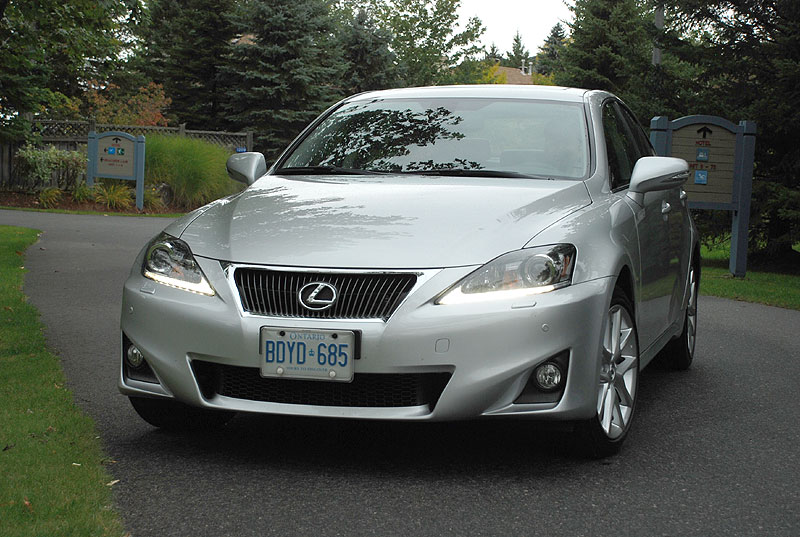
It seems that there's a Lexus IS model to fit a variety of tastes. The 2011 Lexus IS 350 would be the hot salsa version, slotting in between mild and extra-spicy versions. With 306 horsepower on tap from its smooth 3.5-liter V6, the IS 350 delivers enough power to satisfy most of those looking for a sport sedan. By comparison, the less powerful IS 250 is bland and the ultra-performance IS F is too harsh for general consumption. Within the IS line, the 350 is certainly our favorite.
Drivers of every persuasion should appreciate the IS sedan's stylish exterior and the luxurious cabin with its top-notch materials and solid build quality. This year's F Sport package option livens up the IS 350's handling and also further enhances the minor face-lift that the IS receives for 2011. This is also the first year that you can get all-wheel drive with the IS 350, which will no doubt be attractive to drivers who live in harsher climes.
However, the Lexus IS 350 does have some shortcomings. Among these, the limited rear seat space is probably the most significant, as the lack of legroom makes the rear quarters acceptable only for kids. The performance-minded buyer will also find the IS 350 to be a bit of a disappointment considering the car's uncommunicative steering and slow-witted automatic transmission.
This leaves the 2011 Lexus IS 350 as a somewhat compromised choice, since it's neither sporty enough nor practical enough to compete head-to-head with some other models within its market segment of entry-level sport sedans. The Audi A4, Cadillac CTS and Mercedes C-Class are just as sporty to drive, but are more spacious. The BMW 3 Series and Infiniti G37, meanwhile, are wholly more fun to drive than the IS. But if you're smitten with the styling of the IS 350 and value the refined impression that every Lexus makes, the IS 350 is a respectable choice with just enough spice to keep things interesting.

INTERIOR
Up to five occupants fit inside the IS 350, though the backseat is tight. Bright electroluminescent instruments light up the dashboard. Black and silver metallic trim is standard, and wood trim is available. The optional navigation system's voice-recognition software picks up casual-language commands, and the standard audio system has a USB port to better integrate iPods or other MP3 players. Lexus' Enform service, included with the navigation system, can assist in finding street addresses, restaurants and more. It comes with a year's service free; after that, you have to pay a monthly subscription fee. Interior features include:
10-way power front seats
Dual-zone automatic climate control with rear vents
Power moonroof
Manual tilt/telescoping steering wheel (powered version optional)
13-speaker stereo with USB input for portable music players
Optional ventilated front seats
Optional dynamic radar cruise control
Optional navigation system

EXTERIOR
Lexus says the latest IS bears a strong resemblance to its larger GS sedans. A long wheelbase and wide stance help give the IS 350 a muscular appearance. The IS 350 ranks as a compact car. An optional Sport Package includes a sport suspension and 18-inch wheels with grippier summer tires.
The sedan gets a new grille and front bumper and standard high-intensity-discharge headlights, headlight washers and LED daytime running lights. A new optional F Sport Package for the sedan includes a sport suspension, 18-inch wheels and front and rear spoilers, plus available Ultrasonic Blue paint. Exterior features include:
Standard 17-inch alloy wheels
Optional 18-inch alloy wheels
Optional rain-sensing wipers
Optional backup camera with front and rear parking sensors

ENGINE
The 350 is powered by a 3.5-liter V6 engine, spewing some 306 horsepower at 6,400 rpm along with 277 lb-ft of torque at 4,800 rpm, thanks to its high compression ratio of 11.8:1, variable valve timing and direct injection. The IS 350 comes exclusively with a six-speed automatic transmission that drives the rear wheels.
Aside from its larger displacement compared to the IS 250, the IS 250's 3.5-liter V6 also differs in that it augments the direct fuel injection with port fuel injectors. In light- and medium-load conditions, these additional injectors help produce a precise burn, optimizing power and efficiency. A dual exhaust system reduces backpressure at higher engine speeds.
Fuel economy, as estimated by the EPA, is 18 mpg in the city cycle and 25 mpg on the highway.
SAFETY
Standard safety equipment includes antilock disc brakes, brake assist, traction and stability control, front-seat side airbags, side curtain airbags and Safety Connect. The latter is a traditional telematics service with automatic collision notification, stolen vehicle locator and emergency assistance button.
In Edmunds brake testing, the 2011 Lexus IS 350 with the Sport package came to a stop from 60 mph in a short 114 feet.
In government crash testing, the IS 350 managed four stars (out of a possible five) in frontal impacts for the driver and front passenger as well as side impacts for rear passengers. Driver side-impact protection garnered five stars. The Insurance Institute for Highway Safety awarded the IS 350 a perfect "Good" rating for its performance in both frontal-offset and side-impact tests.
reference:http://www.edmunds.com,http://www.leftlanenews.com,http://www.cars.com

Subscribe to:
Posts (Atom)


